 VapeWholesaleHub
Mocha Ice Buyer FAQ for First Time Importers — Online Sellers
Most first time importers of mocha ice ask the same five questions. This page answers them in the order they usually arrive, with the numbers we quote internally rather than round marketing claims.
The Specification That Matters
When we write a mocha ice specification with a distributor, we fix four things first: the resistance band, the liquid capacity tolerance, the puff count methodology and the packaging master carton. Everything else can flex without changing the customer experience.
A written mocha ice specification should be short enough to read in a minute and precise enough to argue about. If a factory cannot confirm a number in writing, assume the number is whatever is cheapest that week.
| Product category | Disposable |
|---|---|
| Resistance band | 0.8 - 1.0 ohm |
| Capacity tolerance | +/- 5% |
| Puff count method | Declared by capacity |
| Master carton | 240 units |
| Carton weight | 6.3 kg |
| Shelf life | 18 months |
| Storage | 15-25 C, dry, away from direct light |
Turning Mocha Ice Into Repeats
Keep the mocha ice range tidy. A half empty shelf reads as a dying line, and customers interpret it that way faster than any signage can correct.
Rotate mocha ice facing rather than price for the first month. Visibility changes sell-through more reliably than a small discount, and it does not train customers to wait for offers.
Logistics That Protect Margin
Air freight makes sense for a first mocha ice order when you need to test demand quickly, but almost every steady programme moves to sea freight once volumes stabilise. Planning that switch early avoids a painful margin squeeze later.
Customs classification for mocha ice varies by market and changes from time to time. We ship with full documentation, but your broker should confirm the current code before your first order rather than after it lands.
How Mocha Ice Batches Are Checked
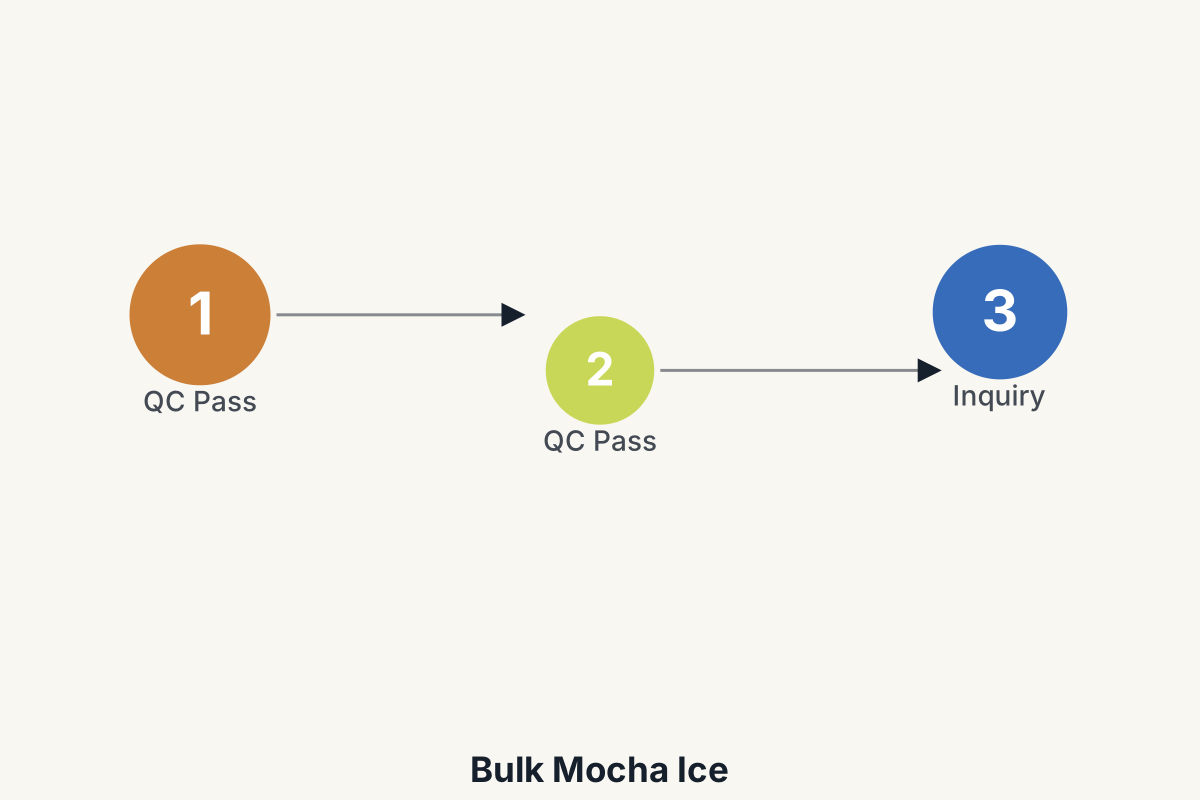
The defect rate that matters is the one your customer experiences, not the one the factory reports. Bridge that gap by inspecting the way a customer would open the box, not the way a line worker packs it.
- Keep sealed retained samples from every production batch.
- Start with a mixed carton and let your own sell-through decide.
- Check carton dimensions against your freight quote before confirming.
- Plan the switch from air to sea freight before you need it.
- Rotate stock by batch code rather than by delivery date.
Pricing and Margin
Hold a small mocha ice buffer in your pricing model for currency movement. A few percent on a container is a real number, and it is easier to plan for than to absorb.
Indicative reference points for planning purposes: entry tier from USD 1.42 per unit at 500 units, mid tier at USD 1.34, and volume tier at USD 1.30 for full container quantities. These figures move with specification, packaging and freight, so treat them as a shape rather than a quote.
Practical Checklist
- Plan the switch from air to sea freight before you need it.
- Ask how the factory measures puff count, then compare like with like.
- Model landed cost, not ex-works price, when comparing quotes.
- Agree the tolerance band in writing before approving artwork.
- Start with a mixed carton and let your own sell-through decide.
- Check carton dimensions against your freight quote before confirming.
Frequently Asked Questions
How do you handle a short shipment?
Cartons are counted and weighed before dispatch and the figures are shared with you. If something is short on arrival, the packing record and the carrier documentation are both available, which keeps the claim straightforward.
Do you hold stock for regular customers?
For established programmes we can reserve production slots and, in some cases, hold finished mocha ice stock against a forecast. It removes most of the lead time risk from a reorder and is worth discussing once volumes are stable.
Do you provide compliance documents?
Every shipment leaves with the documentation set relevant to your market, including batch records and test reports where required. Your local rules still determine what you must file, so confirm those with your broker before import.
What happens if my market changes its rules?
Regulations move, and packaging or documentation sometimes has to follow. We keep approved artwork files on hand so that a required change is a reprint rather than a redesign, which keeps the cost and delay down.
What information do you need to quote?
Target specification, approximate quantity, destination and any packaging requirement. With those four we can usually come back with a costed option the same working day rather than a request for more information.
Next Step
Nobody wins when a first order is too large to learn from. Start with a mixed carton, check how it moves in your own market, then scale the lines that earned the shelf space.
Related Reading
- How to Read a Mocha Ice Certificate of Analysis — New Distributors
- Mocha Ice Working With a Local Compliance Partner — Southeast Asia
- Mocha Ice Mouthpiece Geometry and Comfort — Before Your Next Order
- Mocha Ice Trade Credit and Account Terms — Repeat Orders
- Mocha Ice Sampling Programme: How to Evaluate Before You Commit — Southeast Asia
- Setting Minimum Order Quantities for Mocha Ice — Low Minimum Quantities